

Respiration is a metabolic mechanism that all life forms go through. The production of energy occurs primarily through the absorption of oxygen and the release of carbon dioxide through complicated organic molecules’ oxidation.
The respiratory system in insects is different from that of the human respiratory system. The lungs are the main respiratory organ in animals such as birds, cows, snakes, birds, elephants, lions and humans. Insects breathe via spiracles, while fish breathe through gills. Earthworms inhale and exhale through their skin.
Types of Respiration
Respiration is a metabolic process that all living things face daily. It is a biochemical reaction that takes place within the cells of living organisms. The energy is generated by the breakdown of glucose, which is then used by cells to work various roles. The two types of respirations are,
● Aerobic respiration
It is a form of cellular respiration that produces energy in the presence of oxygen. It is a continuous phase inside plants and animal cells. The chemical equation for aerobic respiration is,
| Glucose + Oxygen → Carbon dioxide + Water + Energy
C6H12O6 + 6O2 → 6CO2 + 6H2O + ATP |
● Anaerobic respiration
It is a form of cellular respiration that produces energy in the absence of oxygen. Anaerobic respiration’s chemical equation can be expressed as,
| Glucose → Alcohol + Carbon dioxide + Energy
C6H12O6 → 2(C2H5OH) + 2(CO2) + ATP |
Human respiratory system
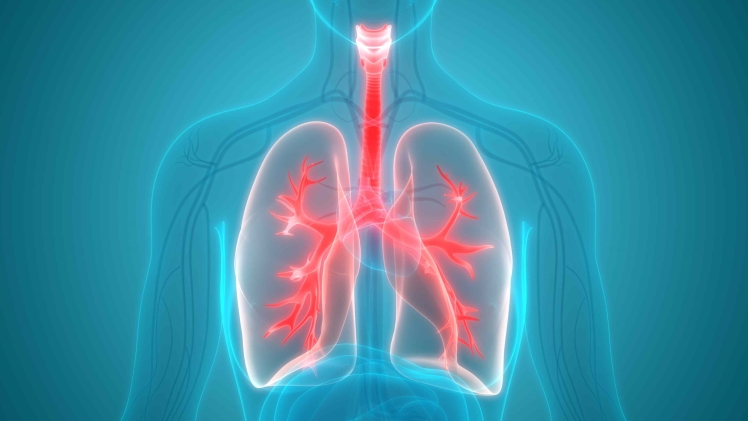
The human respiratory system is made up of tissues and organs that aid in breathing. The lungs are a part of the respiratory system that helps in gas exchange. A network of airways for air passages, muscles and blood vessels that allow breathing are the other vital components.
Parts and Roles of the Respiratory System
Let us consider the various components of the respiratory system and how they operate.
- Nose – The nose has two external nostrils that are separated by a cartilaginous structure known as the septum.
- Larynx – Two cartilaginous chords support the larynx. They are found at the intersection of the pharynx and the trachea.
- Pharynx – The pharynx is a broad hollow space that connects the nasal chambers. It is a well-trained route for both food and air. It works by stopping food particles from entering the windpipe.
- Trachea – The windpipe, or trachea, rises below the larynx and descends to the neck. The trachea’s walls are made up of C-shaped cartilaginous rings that give it hardness and allow it to extend fully.
- Bronchi – The trachea is divided into two tubes called bronchi, each of which enters the lung separately. The bronchi are classified into primary, tertiary, and bronchioles, which are further classified into alveoli, which are tiny air sacs.
- Lungs – In humans and other vertebrates, the lungs are the primary sites of respiration. They are found around the backbone and on either side of the heart in the chest’s thoracic cavity. They are a pair of enormous, spongy organs primarily responsible for gas exchange between the bloodstream and the air. The right lung is much larger and heavier than the left lung.
Functions of alveoli
Millions of microscopic sacs known as alveoli exchange oxygen for carbon dioxide waste within the lungs. The main alveoli function is inhaled oxygen going through the lungs’ capillaries, attaches to haemoglobin, and is circulated into the bloodstream. Carbon dioxide from the blood diffuses into the alveoli and is exhaled.
Conclusion
Inhalation and exhalation of gases, gas exchange among lungs and bloodstream, gaseous exchange among bloodstream and muscle tissue, vocal cord vibration and olfaction are essential functions of the respiratory system.
Read more about: Pii-email
