

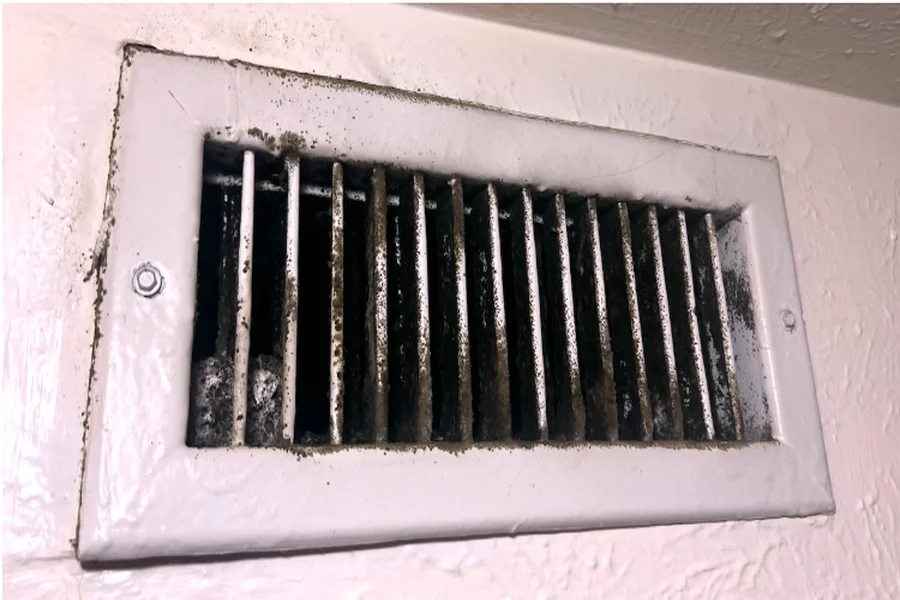
In South Florida, AC isn’t just a luxury, it’s the only thing standing between you and a house that smells like a musty swamp. When mold moves into your ductwork and air handler, you’re basically mainlining mold spores 24/7. If you’ve lived in South Florida long enough, you’ve likely seen entire families coughing for months because the coil looked “a little dirty.” Here’s exactly what works to keep your home’s HVAC mold-free.
1. Know the enemy before you open the unit
95% of the mold lives on the blower wheel and the evaporator coil, not the ducts. The slime you see is usually Cladosporium, Aspergillus, or Penicillium growing in condensate goo. If the blower smells like vinegar when you pull the panel, it’s already bad.
2. DIY clean only if it’s mild (gray dust, no black patches)
Tools to keep in the truck for every house:
- Pump sprayer with 1:10 bleach/water or Benefect Decon 30 (no bleach smell)
- Coil cleaner (Nu-Calgon Evo or plain old 409 for light stuff)
- Shop-vac with HEPA bags
- Flashlight and mirror
Steps to follow:
- Turn power off at the breaker.
- Vacuum loose junk first.
- Spray coil from inside out until it drips clean.
- Clean blower blades with a green scrub pad dipped in cleaner (they’re usually plastic now, don’t bend them).
- Spray everything again and let it sit for at least 10 minutes.
- Rinse with condensate line water if possible.
It will take about 45 minutes and the costs are around $30.
3. When to call the mold removal pros immediately
- Visible black mold on insulation or plenum
- Standing water in the pan that won’t drain
- Coil fins completely clogged (you can’t see daylight through them)
- Anyone in the house has asthma or is immuno-compromised
These jobs require full containment, negative air, and fogging with an EPA-registered sporicide. Expect the HVAC mold remediation to be around $1,200–$3,500 in costs, depending on system size. However, starting with an HVAC mold inspection might be best to start off with before going with a full-blown mold removal service if it’s not actually needed.
4. Fix the reason it grew (or it comes back in 90 days)
- Slope the drain line downhill with no belly sags. Add a P-trap if missing.
- Pour ½ cup white vinegar down the drain line every 30 days to kill slime.
- Install a UV light inside the air handler (I use the $179 R-18 bulb from RemedyUV). Kills everything that passes the coil. Pays for itself in one season.
- Change the filter monthly—use MERV-11 or higher pleated, never the $1 fiberglass mesh.
5. Ducts: clean only if you have proof
Most duct cleaning is a scam in South Florida. If post-remediation air samples are under 500 spores/m³ and nobody’s sick, leave them alone. If you smell musty air the second the fan kicks on, get a duct camera inspection. The real problematic air ducts usually have wet insulation liner peeling off—replace those sections, don’t clean.
6. My never-fail combo for South Florida houses
- Get a Santa Fe whole-house dehumidifier set to 45% RH
- Use a UV light on the coil
- EZ-Trap with float switch and clear section so you can see when it clogs
- Annual coil cleaning the week before hurricane season
You should definitely consider installing this exact setup for anyone who hasn’t had a callback in eight years.
You’ll want to treat your air handler like the giant lung it is. Clean it, keep it dry, and shine 254 nm light on anything that tries to grow. Do that and you’ll breathe easy while the rest of the block is coughing through February. Stay dry, cool, and free of mold spores in the air throughout your South Florida home.
