

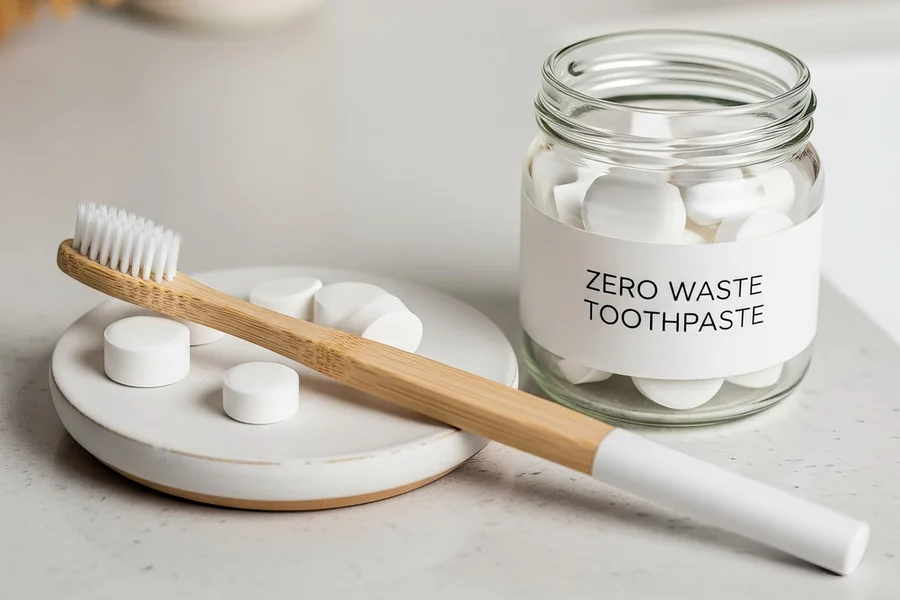
Your usual morning schedule could be significantly changing. Those tiny, bubbling tablets sold at the store promise to revolutionize your teeth-cleaning routine. But do they live up to their hype? Or are they just another trendy health fad disguised in appealing branding?
What Are These Mysterious Tablets?
Think of them as breath mints that also clean your teeth well. These tiny, chalky tablets contain fluoride. They also have cleaning agents and taste just like standard toothpaste. However, they do not have the water and preservatives. You pop one in your mouth, grind it down, and add a splash of water from your toothbrush. Then you start to brush. Each morning, it feels like a chemistry experiment explodes with flavor in your mouth. It is not a new idea. For centuries, individuals have relied on tooth powders. These toothpaste tablets from brands like Ecofam are essentially the contemporary, convenient equivalent of what your great-great-grandmother may have utilized.
The Environmental Angle
This is where it gets interesting. Standard toothpaste tubes are essentially ecological disasters encased in colorful plastic. Many consist of several layers of various materials that render recycling virtually impossible. Even if you extract the very last bit, that tube is going directly to a landfill.
Toothpaste tablets generally arrive in glass containers or eco-friendly packaging. No plastic tubes cluttering your bathroom cabinet or harming the planet. For environmentally aware individuals, this could be the deciding factor. Additionally, they are extremely convenient for travel as there’s no chance of explosive paste accidents in your baggage.
Do They Actually Work?
This is the million-dollar question. The short answer? Essentially, yes. Studies show that fluoride tablets are just as good as regular toothpaste for cleaning teeth. Your mouth is not concerned whether the cleaning agents are from a tube or a tablet. It simply wants the bacteria eliminated.
Nonetheless, there is a process of learning. The initial experiences seem strange. You are primarily consuming something that has the flavor of a chalky mint prior to brushing. Some individuals never adapt to the texture, while others discover it invigorating after a week or two.
The Money Factor
Let’s discuss money and finances. Tablets generally have a higher initial price compared to standard toothpaste. A normal container could cost you double what a regular tube would. However, the twist is that you typically apply less product with each brush, allowing them to last longer than expected.
The math becomes even more interesting when you include travel. No need to purchase small travel containers or stress over liquid limitations. A single small container can last for weeks of journeys.
Practical Considerations
Tablets make storage easier. No chaotic caps or hardened paste around the top. They do not drip, solidify, or break apart like conventional paste occasionally does. Children frequently consider them more enjoyable to use, which can reduce the struggle of getting them to brush daily.
Conversely, sharing gets more complicated. With standard toothpaste, everyone presses from the same tube. With tablets, each individual requires their own piece, which some families view as wasteful or impractical.
Conclusion
Are tablets superior? It depends on what is most important to you. If you focus on environmental effects and ease, they likely merit the change. If you’re completely satisfied with your existing routine and prefer not to spend more, continue with what is effective. The cleaning power is largely comparable, making this choice depend on individual preferences, ecological beliefs, and financial factors. Begin small and let your mouth be your guide as to whether this new item fits into your life or becomes an extra hassle each morning.
